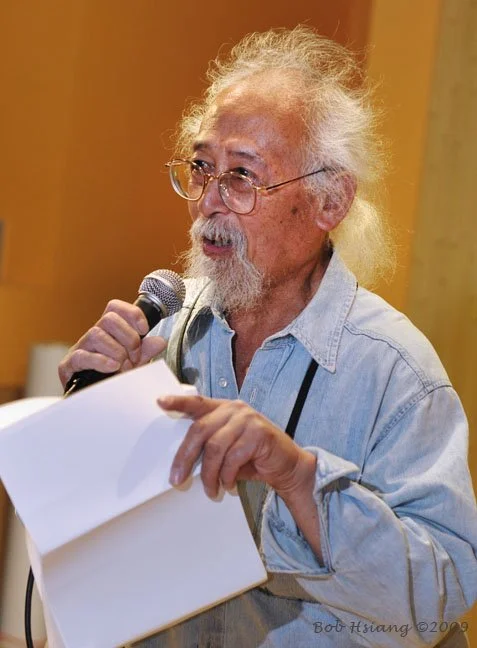
Remembering Al Robles
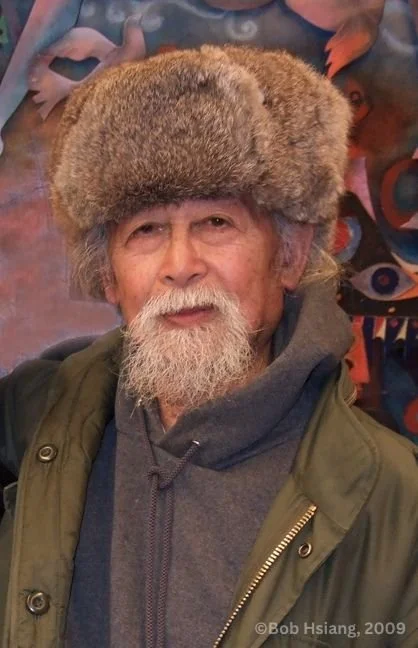
To many of us, Al Robles was the embodiment of the spirit of the International Hotel (I-Hotel). A humble man with multiple talents and interests, his activities included building teahouses, teaching poetry in schools, cultural centers and prisons, organizing readings and community festivals, advocating for affordable housing, and collecting oral histories. He had a lifelong commitment to serve seniors and was also a mentor to young people, who affectionately called him Uncle Al. His documentation of the oral histories of manongs led him to Hawaii, Los Angeles, Seattle, Stockton, Delano, and California’s Central Valley.
Al was involved in the I-Hotel tenants’ long battle against eviction and also with Kearny Street Workshop, where he co-founded the Kearny Street Writers Workshop. He encouraged me to write poetry, patiently nudging me every week until one day I surprised him with a poem. Al served on the citizens committee that fought over a 28-year period to rebuild the I-Hotel. In the early 1980s, he co- founded the Manilatown Senior Center to provide meals and services to the seniors. After the new I- Hotel Senior Housing was built, he continued to be active with Manilatown Heritage Foundation and the Chinatown community. He worked at Self Help for the Elderly until his untimely death in 2009 at the age of 79. A prolific poet, avid jazz pianist and compassionate advocate for human dignity, Al’s reach and influence extended far beyond the Filipino community. His humility and generosity endeared him to many.
As the Filipino poet laureate and community historian, Al wrote extensively about Ifugao Mountain and a character named Tagatac. He had never been to the Philippines, but he was in touch with the soul of the Filipino, having made it his life work to record and honor these first wave immigrants who lived out their lives in single occupancy hotels. His poems tell the stories of these manongs – their dreams and struggles in America and their memories of the Philippines. Sometimes Al wrote poems about his fellow poets, turning them into fictionalized characters, too, as if we were all in a magical world of our own. He himself became a legend and there are many tales of him. Here is just one of the stories.
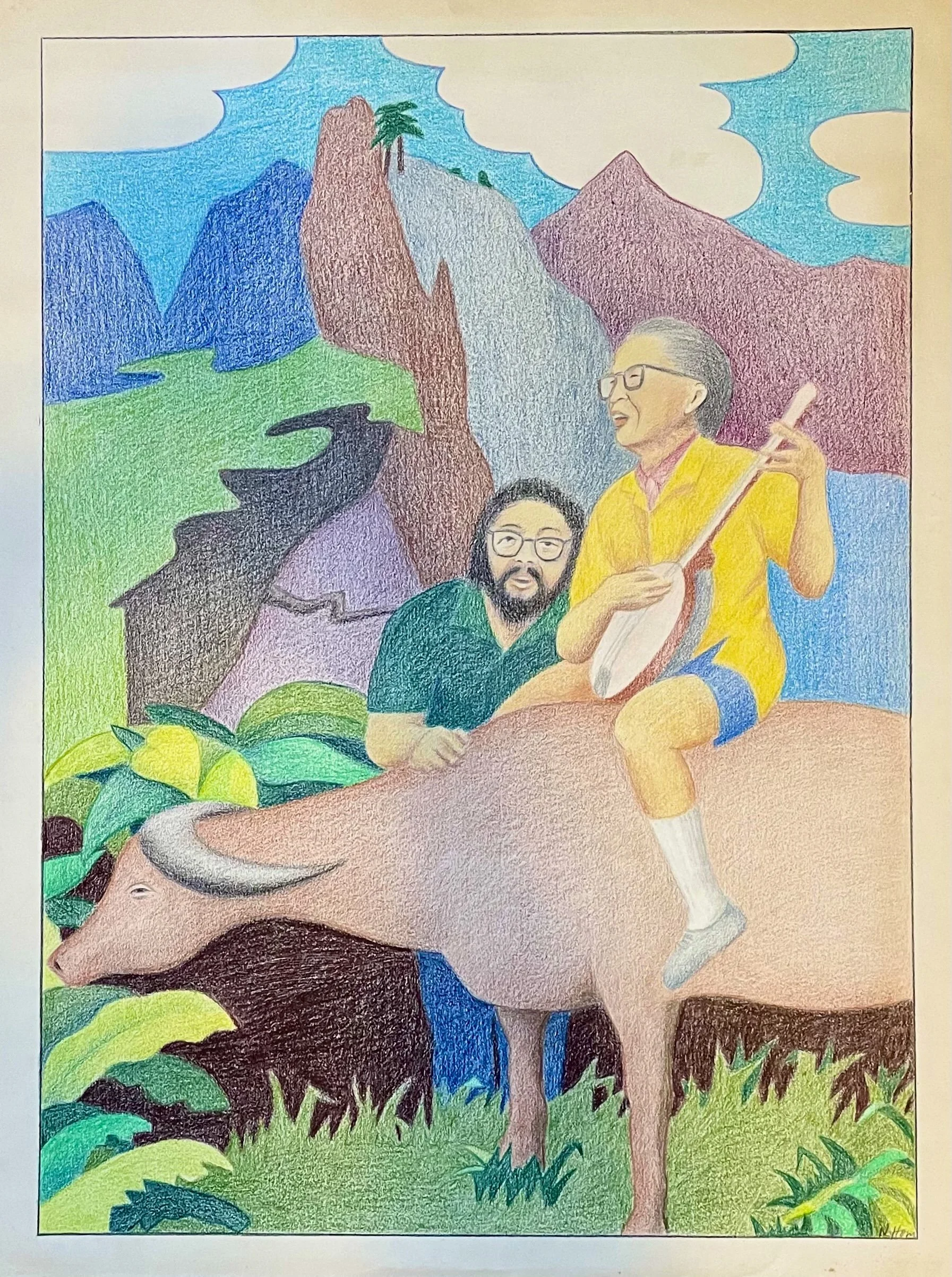
AL & FREDDY
1978 24"h x 18"w Colored Pencil
At a poetry and song event that Al organized at Camaron House, he had coaxed a half dozen seniors to perform with him by promising to cook them fish head soup. The catch was that they had to sit at tables on stage and eat the fish heads in front of the audience. The manongs sat at the tables, which were decorated with palm leaves and pineapples. The soup was brought out by women in long flowing shawls, one fish head per bowl with a heap of rice on the side. They heartily slurped as Al read poetry about finding Ifugao Mountain right here on Kearny Street in the hearts of the manongs. They ate and Al read and Joe played the guitar; his old fingers flying nimbly across the strings.
After the manongs were finished with their meal, they gathered around the mike in a circle. Al started to talk story and slyly got the manongs engaged. “Remember, Freddy, that song you used to sing that made the women cry...how did it go?” And Al would sing a few notes and 92-year- old Freddy who used to sing and dance and play the banjo for us on Kearny Street, would sing in as beautiful a voice as ever. Come to me my melancholy baby....A woman got up and swayed to the music; someone played the harmonica and others joined in, urged on by Al’s loving touch and Freddie’s deep voice. Come to me and don’t be blue....
Towards the end of the evening they wouldn’t stop singing. Women sang and danced; men crooned and stomped their feet. We closed the place late, with the manongs begging for one more goodbye song, their bellies full of fish head soup, our hearts nourished and fed as well.